Showing posts with label folktales. Show all posts

Friday, December 9, 2011

"Once there was and was not." Lucine Kasbarian's tale from Armenia


Ever since I read Lucine Kasbarian's  folktale, The Greedy Sparrow, an Armenian Tale  published this year by Marshall Cavendish, I've wanted to talk with her. I wanted to understand her process of retelling a tale and how this tale holds the traditions of the Armenian tales she grew up hearing.  Then I heard that UNESCO named Yerevan, capital city of Armenia, as the World Book Capital for 2012.  So I wrote her.  Lucine and I are connected by publisher.  I also have a book coming with Marshall Cavendish, a small press in the limelight today since its children's book list was acquired by a new Amazon imprint. One thing Lucine and I hear from publishers and editors at Cavendish and the new Amazon imprint is that they  "believe in the craft of the book." 
The Greedy Sparrow is, indeed, such a book of craft. It's a wry comeuppance tale of a sparrow who tries to manipulate  a series of village folk and animals - and does pay. Lucine explained about The Greedy Sparrow, the Armenian folktale tradition, the city of Yerevan, and Armenia today. 

Saturday, April 2, 2011

Trouble


Trouble by Jane Kurtz, illustrated by Durga Bernhard, is a great discovery. This version of an Eritrian tale, available from the literacy organization, Ethiopia Reads, is  bilingual: Amharic and English.  Katz's telling is a cumulative tale that follows a boy, Tekleh, who the reader sees is setting himself up for plenty of trouble, something his father has warned him against.  But in a surprise cycle of events, the boy lucks out in an unexpected turn. Kurtz starts right off with trouble.  "He didn't mean to get stung by poking a stick into a line of marching ants.  He didn't mean to make dust fly onto the roasting coffee beans." Another thing I love - the book incorporates in the English telling Amharic words for animals and foods and musical instruments. It's a story about all children on adventures, discovering their world, a goal we have for the Bhutanese tale we select in our Nepali picture book project. (See links on the right to follow the project.)

Tuesday, December 14, 2010

Nepali Tale: The Three Shells

itunes pic
STORY Connections is our first  experimental  folklore podcast from the New Hampshire Humanities Council literacy program, Connections. Here's our first bilingual folktale -  "The Three Balls" - a tale from Bhutan told in Nepali  by Ghana and in English by Nilhari Bhandari.
Listen to The Three Shells!
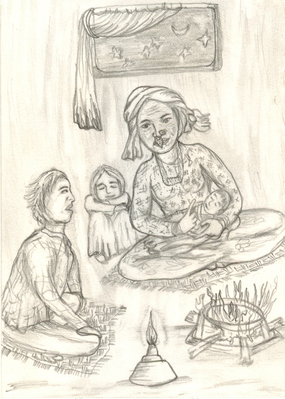
The drawing, by Laconia artist Dal Rai, is of a traditional Bhutanese grandmother telling stories to help her grandchildren go to sleep. 

Wednesday, November 10, 2010

Bhutanese Storytellers Stun us With Stories


Laurie Lalish, teacher, and Jo Radner storyteller and folklorist
 ESOL teacher Laurie Lalish, storyteller Jo Radner, and I welcomed students
in Laurie's class in Laconia, NH.  This gathering is momentous  for our
Nepali-English picture book project of the New Hampshire Humanities Council.  The students are from Bhutan and Jo
asked them, through our interpreter Nilhari Bhandari,  to teach her and Laurie and me what kinds of stories they tell in Bhutan and when they listened to stories. They told about games they played as children,  and songs women sang as they gathered firewood.   Then Jo asked them to think about a story they heard as a child.  We thought we would hear small fragments of stories as people began to go back in time and remember people who told them stories. We were astounded.  Hari Tiwari and Bishnu Mishra, two members of Laurie's class,  told long, complex, fully developed stories.  We have them on tape and will soon post audio.  Here is a small photo gallery of players in our first story gathering workshop.

Chandra, Hari, Batuli , and Mon  prepare to sing a work sang they sang as children.

Batuli and Mon 

Hari tells a story

Bishnu tells a story

Nilhari Bhandari interprets for Jo into Nepali and the Nepali stories people tell into English
Stay tuned.  Audio will come in both Nepali and English.


Thursday, July 22, 2010

Folktales - Just When We are Writing One

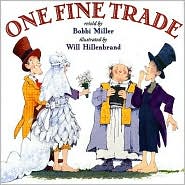
I've heard from two teachers just recently panning folktales. No one is interested, they said.  Then I saw the Fuse # 8 Production  blog post from reviewer and NYC librarian Elizabeth Bird,  "Where have all the folktales gone?"  She was reviewing Bobbi's Miller's tale, One Fine Trade and wrote that ever-so-few tales are being published. Oh, dear, and just when we are writing one.
Then comes Bobbi Miller's compilation of essays about folktales from  practitioners and editors.  
Listen to Emma Dryden.  
She writes that folktales, 
"...which require time to read, which require thought to process, and which require the reader to reflect and ponder in addition to laugh or cry—are considered too quiet, too slow, too ponderous for today's adults and children who are moving too quickly, whose attention spans are too short, and, really, who have not been educated or brought up to appreciate how what's come before them still matters and informs what comes next.... History and mythology are the stuff of which great folktales come—and so folktales do not quite fit in with the current societal trends. This is tragically short-sighted, and this way of operating is doing a tremendous disservice to our children and to our future as a culture."
Wow, Emma.


Bobbi writes,
"To my mind, a folktale does you little good if it doesn’t fall trippingly off the tongue." She calls it an appreciation of language itself. 


Just heard On Point, the NPR show, recently on "India's Great Texts Revisited." Conversation was on epic myths,  the Mahabharata and the Ramayana, and the link to contemporary Indian films and stories. Fascinating.
We've got work to do with this wonderful call to arms. Are there characters from folktales or myths that you still bump into today in the grocery store?